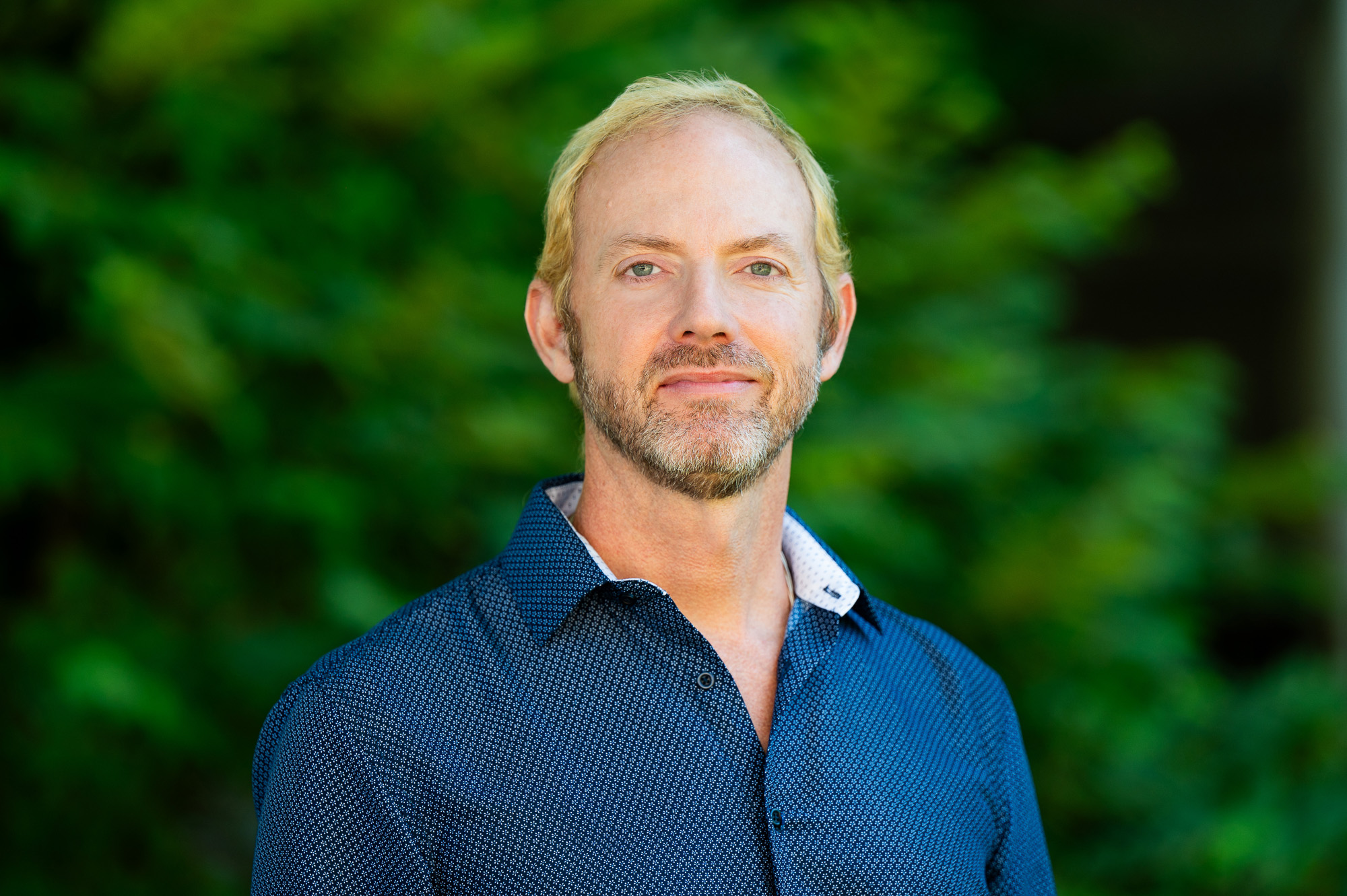
Innovating how people and AI agents establish trust and collaborate online.
Currently: Principal Engineer, Applied Technology Lab, Harvard SEAS (through December 2026). Based in Los Angeles.
About
Brendan A. Miller is a technologist with a civic mission, applying private- and public-sector experience to innovate how people and AI agents establish trust and collaborate online. He is Principal Engineer at the Applied Technology Lab at Harvard's School of Engineering and Applied Sciences and an Affiliate of Harvard's Berkman Klein Center, where from April 2024 to June 2026 he was Principal Engineer at the Applied Social Media Lab. He is an editor of the Decentralized Trust Graph specifications at the Trust over IP Foundation. Previously, he served as Chief Software Architect for Fortune 500 clients and directed the Office of Science and Technology at the New Mexico Economic Development Department, where he authored state strategies for technology commercialization.
What I've Shipped
Keyring, open-source wallet and reference implementation of the Decentralized Trust Graph. Public since April 2026; covered by the Harvard Gazette.
Advanced Digital Identity: I lead research and development on user-owned identity that lets people form and manage their social networks and delegated agents in a verified, portable and private way, and prove specific facts (their age, an account they control, that they met someone in person) without handing over the underlying data. The aim is a trust layer for the internet that starts from human and organizational trust, so anyone can tell, bottom-up and verifiably, which agents are acting for whom and within what limits.
Keyring. I originated Keyring, our open-source reference implementation, and lead it with Senior Engineer Alberto Leon, who is its primary engineer. It is a fork of the OpenWallet Foundation's Bifold wallet and the Government of British Columbia's BC Wallet app, and went public in April 2026. The First Person Project White Paper credits the two of us as its developers.
OpenVTC. I am a member of the project team for OpenVTC, the open-source verifiable trust community project at LF Decentralized Trust Labs, and co-presented its demonstration to Linux kernel contributors at the Linux Plumbers Conference in October 2026.
LLM Engine: I am the initiator and Principal Engineer on LLM Engine, the Applied Social Media Lab's open-source service for deploying LLM agents into live group conversations across Slack, Zoom, and NextSpace. The focus is agents that facilitate and enhance discussion for users with diverse goals and needs. It has been used at Berkman Klein Center events and in Professor Jonathan Zittrain's classes, and it includes LLM-as-judge evaluation suites and red-team testing. I continue to lead its engineering. I was also one of nine co-authors of Mapping LLM Tools for Public Discourse, Pluralism & Social Cohesion (PDF, 2025), with a focus on the deliberative-platforms section.
Agent Safety
I work on one problem from two sides: keeping AI agents accountable to the people they act for.
Control: who does this agent work for, and within what limits? The DTG Credentials specification defines two credentials for this. A Verifiable Delegation Credential (VDC) appoints an agent to act in a person's or organization's name, for a bounded set of acts, for a limited time, and revocably. A Verifiable Authority Credential (VAC) states what an agent may do within a scope, and can only be narrowed, never widened, as it is passed down. Neither is a bearer token: the agent must prove control of its key when it acts, and a verifier checks the whole chain back to an accountable person or organization. The approach starts from trust between humans and organizations, so authority is traceable bottom-up. In October 2026, the Prague demo showed Keyring and OpenVTC verifying open-source contributors and the agents working for them (Linux Foundation write-up), and the OpenVTC contributors are applying to advance it to a full LF Decentralized Trust project, as described in the First Person Project White Paper.
Conduct: how should agents behave in live groups, and how do we test it?LLM Engine runs agents in real group conversations at Berkman Klein Center events and in classes. Its open-source evaluation suites use LLM-as-judge checks for behavior-policy compliance, intervention judgment and privacy, alongside red-team tests. The Mapping report I co-authored surveys this space.
What I want to learn next is empirical: where enforcement of these credentials belongs, how well it holds when agents are pressured or manipulated by groups of people, and what monitoring has to sit on top. The specifications define who an agent works for. Testing how well that holds up is the work ahead.
Earlier Work
Decentralized social media research: Since 2019 I have maintained an open guide to decentralized social platforms, protocols and concepts. I was also CTO of 2GATHER (January 2015 to March 2024), an open-source side project I pursued alongside my full-time work, to build a decentralized alternative to advertising-driven social media.
Software architecture: Chief Software Architect and Lead Engineer at The Branding Farm (to April 2024), leading web engineering for Fortune 500 clients and major film studios.
Collaborators
This work is done with others. The editors of the credentials and VTI specifications are listed in each specification: Glenn Gore (Affinidi), Drummond Reed (First Person Cooperative), Geoff Turk (ic3 Software), Martina Kolpondinos (Kosma Connect) and Alberto Leon (Harvard Applied Technology Lab, with whom I lead Keyring). The Prague demo write-up was co-authored with them and with Hart Montgomery, CTO of LF Decentralized Trust. We are also members of the OpenVTC project team.
At the Applied Social Media Lab I worked with Principal Investigators Jonathan Zittrain (Professor of Law and of Computer Science; Faculty Chair and Director of the Berkman Klein Center) and James Mickens (Gordon McKay Professor of Computer Science at Harvard SEAS and a Director of the Center), and closely with Josh Joseph, the Center's Chief AI Scientist. LLM Engine and NextSpace are built with Senior Engineer Jennifer Hickey and Principal Engineer Chelsea Baltierra Johnson; the project pages list the full teams.
The First Person Project White Paper (v2.0, Nov 2026; editors Drummond Reed and Martina Kolpondinos) — describes Keyring as developed by the Harvard Applied Technology Lab team of Brendan Miller and Alberto Leon, and places OpenVTC in the Linux Foundation Decentralized Trust ecosystem.
Harvard Gazette — on the launch of the Keyring wallet and the case for user-owned identity.